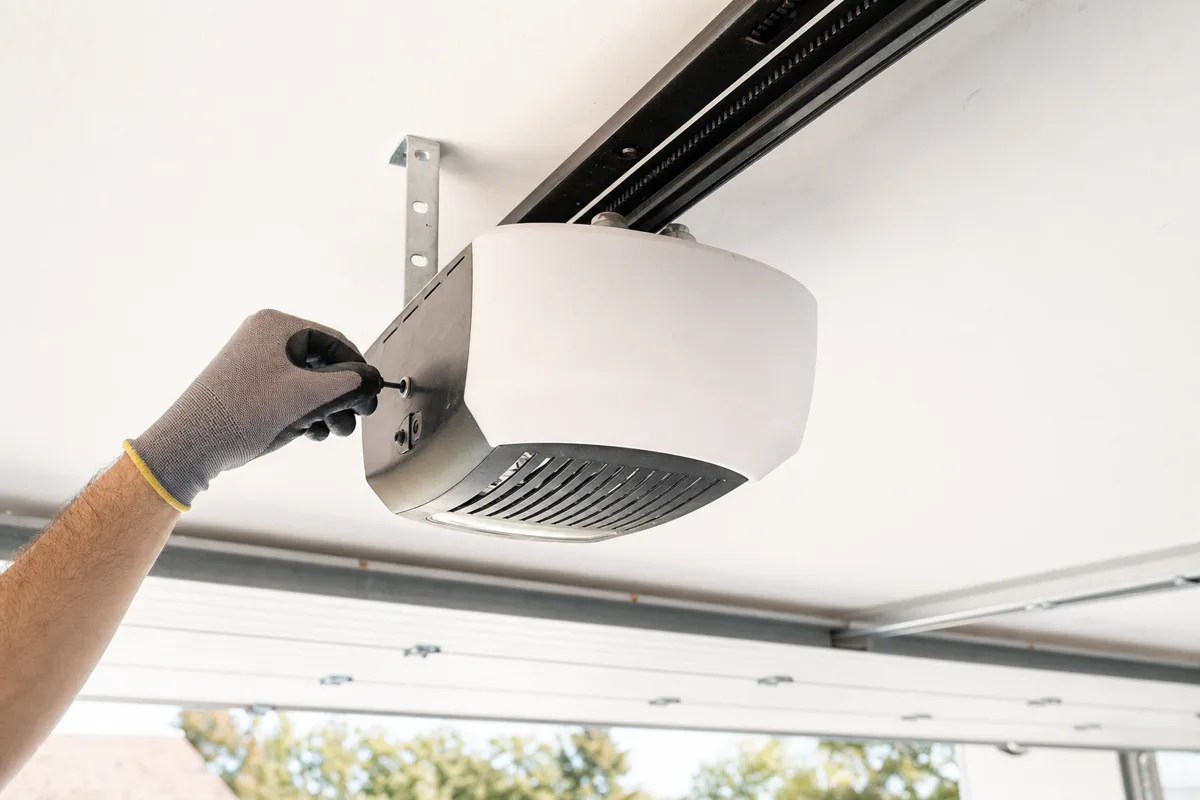

Garage Door Opener Repair
Fault-finding on operators that hum, stall, reverse early or ignore their controls.
View serviceA door that reverses partway down, or refuses to move at all, is usually reporting a fault rather than suffering one. Work through these checks in order, and stop the moment the door tilts, drags or needs force.
The most common cause by a wide margin is the photo-eye safety pair: a blocked beam, a dirty lens, a bracket knocked out of alignment, or low winter sunlight striking the receiver. Clear the threshold, wipe both lenses with a dry cloth, and compare the indicator lights against what the opener normally shows. If the door still reverses, drags, shakes or comes down unevenly, stop testing. Resistance in the track, rollers, cables or springs needs a technician, not another button press.
The instinct with a door that will not close is to keep pressing the button, and that is the one thing worth avoiding. Each attempt either repeats a harmless sensor fault or drives the door deeper into a mechanical one. Stand clear of the opening where you can see the whole door, and watch a single attempt from start to finish. Note exactly where it stops or reverses, and whether the travel up to that point looked level and smooth. Keep vehicles, children and pets out of the doorway while you test. If holding the wall button down is the only way to get the door to the floor, treat that as a diagnostic result rather than a fix: operators fall back to hold-to-run closing precisely when they cannot confirm the safety beam. Once a check produces a normal close, watch a few ordinary cycles before deciding it is genuinely resolved.
Start at the top. The early checks are the most common causes and need no tools.
Move bins, tools, sports equipment, car mats and anything else near the opening. Look along the entire line where the bottom seal meets the concrete, paying particular attention to both corners, where grit, leaf litter and packed snow collect. Then run one closing attempt from a safe position and note whether the door stops at the same height as before.
What it means: A clean close after clearing the floor means the obstruction was at the threshold, not in the opener.
The two sensors sit low on the vertical tracks, roughly a hand's width above the floor. Wipe each lens with a clean dry cloth, then check whether either bracket has been bumped, twisted or knocked loose. Look for cobwebs, an extension cord, a snow shovel or stored items crossing the beam line between them.
What it means: A flickering or abnormal sensor indicator light almost always identifies an alignment or beam fault.
If the fault only happens in bright daylight, hold a piece of cardboard beside the receiving sensor to shade it, without covering the doorway or touching the lens. Run one closing attempt and watch whether the receiver's light steadies while shaded. Never tape anything over a lens or block the beam itself.
What it means: A steady light and a successful close while shaded points to glare disrupting the receiver.
With the full door in view, press the wired wall button for a single cycle. Check whether a lock or vacation setting is engaged, since that mode disables remotes and keypads while leaving the wall control working. Note whether the door behaves differently from the wall button than it did from the remote.
What it means: Working from the wall button but not the remotes moves the fault to the radio side or a lock mode, not the door.
From well clear of the opening, run one cycle and watch the sections, the rollers and both cables. Look for a door that comes down out of level, a cable that has gone slack, a roller that is dragging instead of turning, or a gap opening between the door and a track. Then stop testing regardless of what you saw.
What it means: Uneven travel, a slack cable or a visible gap at the track is mechanical, and the door should be left alone until it is inspected.
Stop immediately if the door hangs out of level, a cable is slack or frayed, you can see a gap in a spring coil, or the door needs force to move. In any of those states the door's weight is no longer properly supported and it can move without warning. Do not raise the opener's force setting to make the door close: force limits are a safety system, and defeating them removes the reversal that protects anyone standing in the opening. Never tape over, unplug or bypass a photo eye, and never lift a door with a broken spring by hand.
Oshawa's winters make the threshold check the first one for a reason. Seasonal snowfall averages 101.7 centimetres and the January daily mean is minus 5.0 degrees with a mean daily low of minus 8.9, so meltwater under a bottom seal refreezes overnight into a ridge the opener reads as an obstruction. Low-angle winter sun off Lake Ontario is the other seasonal culprit, and it reaches receivers most directly in the lakeside streets of Lakeview and Farewell. In the older south and central grid, where Central and Downtown are 57 per cent built in 1960 or before, a detached rear garage on a narrow drive also collects windblown snow across its opening in a way an attached double in Taunton does not.
Fill out the form and we'll confirm your appointment by email.
These guides are written for Oshawa homes. If the fix is beyond a homeowner check, we work everywhere inside this area.
Map data © Google. Pin shows the service area, not a walk-in location — all work is done at your home.

A real callout, not stock imagery.
A sectional door pulled off its tracks, taken down and supported on site so it could be checked and re-hung safely — photographed on the job.