
Garage Door Spring Replacement
Broken torsion and extension springs replaced as correctly matched sets.
View detailsFrayed, slack or unwound lift cables renewed and rewound evenly on the drums.

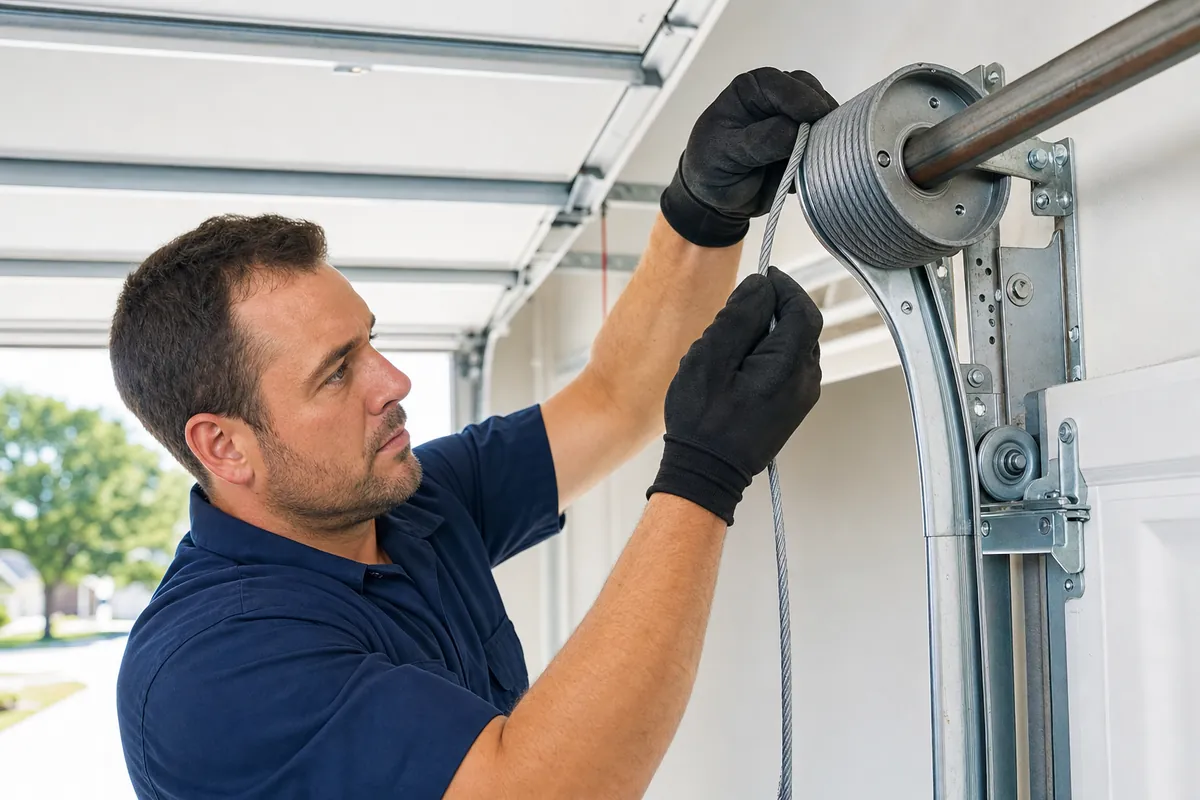
Lift cables are the quiet part of the system. Two steel cables run from the bottom brackets up to grooved drums on the torsion shaft, and they transfer the spring's stored energy into the door's actual movement. They are also the component most people never look at, which is why the usual first sign of trouble is a door that has already gone crooked. Cable work covers renewal, rewinding a cable that has jumped its drum, correcting the drum settings so both sides carry equally, and dealing with the corrosion and fraying that Ontario winters produce at the bottom of the track.
Cables are not usually replaced on a schedule; they are replaced when inspection finds them worn, and they should be inspected far more often than they are. Sound cables on a properly balanced door running on good drums can last as long as the springs, and they routinely do. What shortens them is corrosion at the bottom, shock loading from a spring failure, and running slack because a drum or a bottom bracket was never set correctly. Any broken strand anywhere along a cable means renewal, both sides, rather than a repair, because a cable is only as strong as its worst point.
Our troubleshooting guides walk the diagnostic checks in order so you can confirm the fault before booking.
The lowest point of the cable sits where salt-laden slush collects and dries. Steel corrodes where salt holds moisture against it, and strands begin to break from the outside. This is the most common cable failure in this climate and the reason cable inspection is worth doing before winter rather than after.
If a door is closed onto an obstruction, or one side lands early, the cable can go slack and leave its groove. Once off the drum it winds unevenly or bunches, the two sides stop carrying equally, and the door starts to travel crooked. Rewinding it is straightforward; finding what let it go slack matters more.
The two drums must be set so both cables reach equal tension at the same door position. If a drum has crept on the shaft, or the shaft has bowed, or a bearing has developed play, one cable takes more load than the other and wears accordingly. That is a setup fault rather than a part fault.
When a spring fractures, the door's weight lands on the cables suddenly. Even where they survive, the shock loading can leave kinks or crushed sections that will fail later. Cables get inspected as a matter of course during spring replacement for exactly this reason.
This is the service where Oshawa's geography shows up most clearly. Lakeview sits on the Lake Ontario shore and Farewell holds the harbour, the pier and a good deal of industrial traffic, and constantly moving damp air plus road salt is exactly the combination that eats galvanised cable at the bottom bracket. Out in the rural north, where 94 per cent of homes are detached and laneways are long and often gravel, wind crosses open ground at hardware with nothing sheltering it. Seasonal snowfall averages 101.7 centimetres across the city, and every centimetre of it eventually becomes salted slush drying on a garage floor.
Never work on a cable while the springs are wound. The cables are what hold the door against the counterbalance, and releasing one under load lets the door fall or the shaft spin. Do not attempt to lever a wedged door back into its tracks; if a cable has failed the door is unsupported on that side and can move suddenly. Bottom brackets carry the cable termination and the door's weight together, so their bolts must not be loosened by anyone other than a technician with the tension controlled. Stop using a door with a slack or frayed cable and book through the form.
The door is secured so it cannot move, and spring tension is released or controlled before any cable is touched. A cable under load is not something to work on hopefully. Track clamps and proper support go in first, every time.
Cables are examined along their full length, not only where the fault is obvious: at the bottom bracket, along the free run, at the drum groove and at the crimped ends. Broken strands anywhere condemn the cable. Both sides are replaced together so their length and stretch match.
New cables are seated in their grooves, the drums set for equal tension, and the shaft, bearings and bottom brackets checked for wear, play and secure fixing. Bottom brackets in particular are load-bearing hardware and are never adjusted while the door is under spring tension.
The door is run through full cycles and checked for level travel on both sides, with the cables staying seated and taut throughout. Balance is confirmed by hand, and the operator's limits and safety reverse are tested before the visit is closed out.
Broken torsion and extension springs replaced as correctly matched sets.
View details
Seized rollers renewed, bent rails straightened, derailed doors re-railed and squared.
View details
Balance test, hardware torque, lubrication and a full safety-system check.
View detailsFill out the form and we'll confirm your appointment by email.
Garage Door Cable Repair is available across every Oshawa neighbourhood inside the area below.
Map data © Google. Pin shows the service area, not a walk-in location — all work is done at your home.

A real callout, not stock imagery.
A sectional door pulled off its tracks, taken down and supported on site so it could be checked and re-hung safely — photographed on the job.