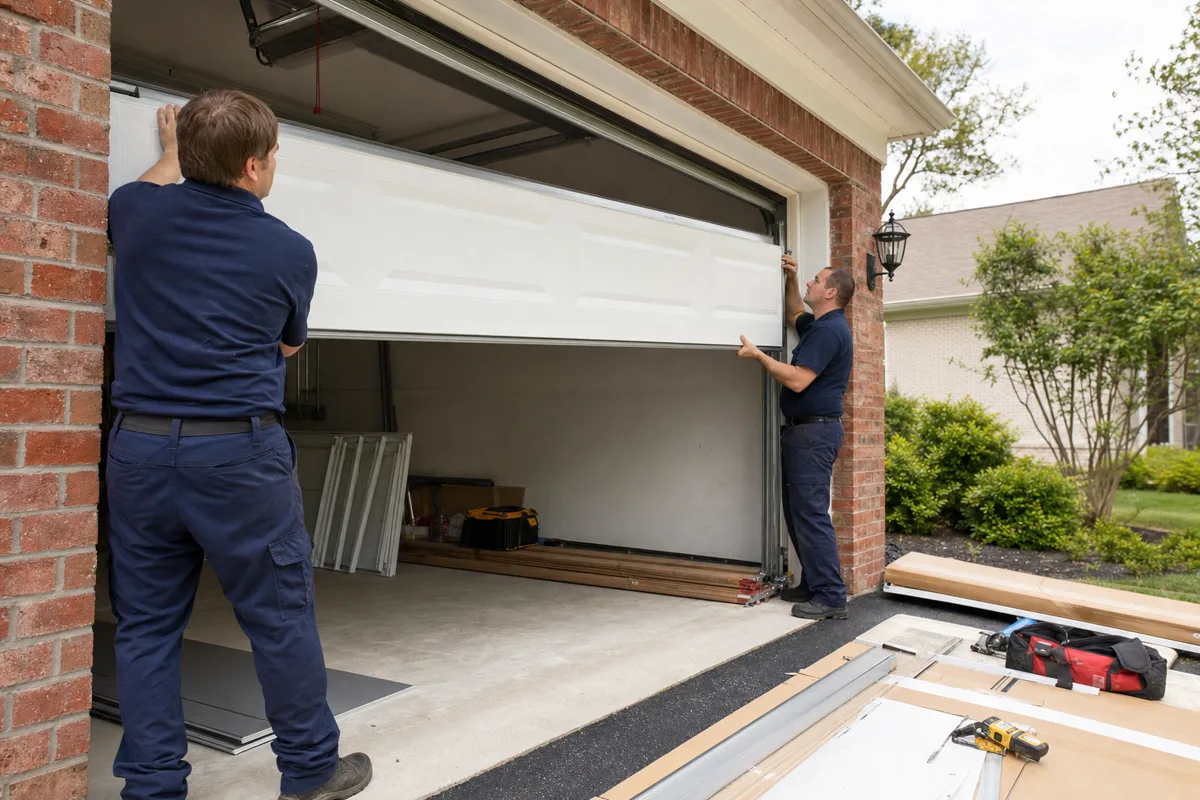

New Garage Door Installation
Replacement doors measured to the real opening, headroom and side room.
View detailsDented, split or rusted sections matched to the door already on the opening.
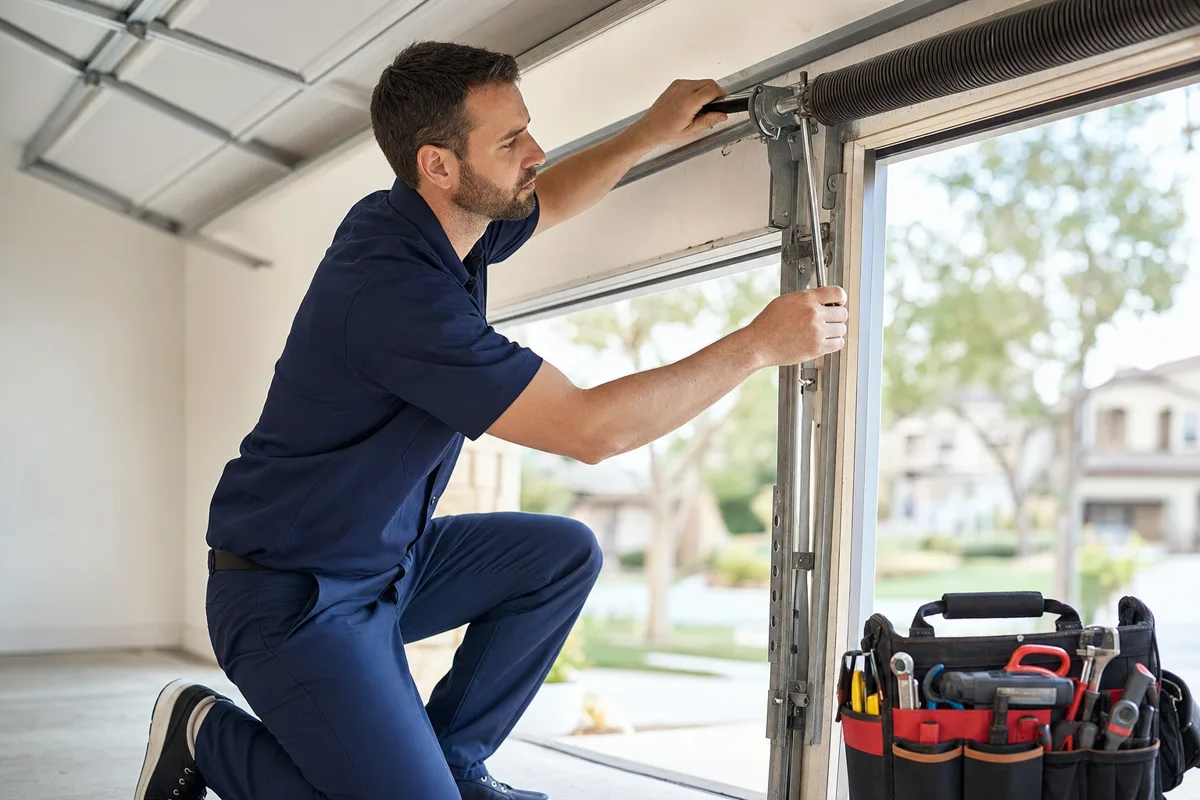
Replacing a section rather than a whole door is often the right call, and sometimes it is not possible at all. A single dented bottom section on an otherwise sound door is a straightforward repair that keeps the rest of the assembly in service. A discontinued profile, a door with sections that have delaminated across the board, or damage that has bent the stiles and hinges is a different conversation. The honest work in this service is the assessment: whether a matching section can actually be obtained, and whether replacing one is good value against the condition of the rest.
A replaced section lasts as long as a new door's section would, which is to say decades in a steel door that is kept clean at the bottom and running in balance. The variable is the rest of the door. Fitting a new section to a door whose remaining sections are twenty years old and delaminating buys a year or two, and the mismatch in finish will be permanent. Where three or more sections are compromised, or the profile is discontinued, replacing the door is generally better value and gives a matched appearance plus current insulation and hardware.
Our troubleshooting guides walk the diagnostic checks in order so you can confirm the fault before booking.
The bottom section takes almost all impact damage, usually from a bumper, a trailer, a snowblower or a rebounding basketball. Where the impact is confined to one section and the stiles and hinges are intact, single-section replacement is the standard remedy.
The lowest few centimetres of a steel door sit in salted meltwater every winter. Steel rusts from the inside of the hem outward, so the visible bubbling usually understates the damage. This is the most common non-impact reason for bottom-section replacement in this climate.
On insulated doors, the bond between skin and core can fail, leaving sections that flex, rattle and lose rigidity. Where it affects one section, replacement works. Where it appears across several, the door is telling you it has reached the end of its useful life.
Hinges and roller brackets are fixed into the section's end stiles, and thousands of cycles plus an out-of-balance door can tear those fixings out. Repair sometimes means reinforcement rather than a new section, and sometimes the stile is too far gone and the section has to go.
Panel matching is where Oshawa's age profile bites. With 15,700 dwellings built in 1960 or before and 23,330 built between 1961 and 1980, a large number of doors on the older south and central streets are old enough that the original profile is long discontinued, so an exact match is often unavailable and the choice becomes a whole door or a visibly different section. In the South Field Heritage Conservation District, designated in 2021 as the city's first, and around the 40-plus properties designated under the Ontario Heritage Act, appearance carries weight and any replacement should be checked against the applicable heritage requirements before it is ordered.
Sections cannot be removed while the springs are wound. Releasing hinge or bracket fixings on a tensioned door leaves the remaining sections and cables carrying loads they were not designed for, and the door can move suddenly. Bottom brackets carry the lift-cable terminations under full tension and must never be unbolted by a homeowner. Steel sections have sharp edges and cut ends. If a section is damaged badly enough that the door no longer runs true, stop using it and book an assessment rather than cycling it until something else breaks.
Manufacturer, model, profile, gauge, insulation type, finish and section height are all identified before anything is promised. Panel availability is confirmed first, because on an older or discontinued door a matching section may simply not exist, and knowing that early changes the whole decision.
The other sections, stiles, hinges, rollers, track, cables and springs are inspected. If several sections are near the end of their life, replacing one is poor value, and the assessment will say so rather than quietly taking the smaller job.
Spring tension is released or controlled, the door supported, and the affected section removed with its hinges and hardware. The new section is fitted, aligned to the sections above and below, and its hinges, rollers and any struts refitted or renewed as needed.
Springs are re-tensioned, cables reseated on their drums at equal tension, and the door cycled and checked for level travel. The bottom seal is checked against the floor across the full width, and the operator's limits, forces and safety reverse are reset and tested.
Replacement doors measured to the real opening, headroom and side room.
View details
Seized rollers renewed, bent rails straightened, derailed doors re-railed and squared.
View details
Balance test, hardware torque, lubrication and a full safety-system check.
View detailsFill out the form and we'll confirm your appointment by email.
Garage Door Panel Replacement is available across every Oshawa neighbourhood inside the area below.
Map data © Google. Pin shows the service area, not a walk-in location — all work is done at your home.

A real callout, not stock imagery.
A sectional door pulled off its tracks, taken down and supported on site so it could be checked and re-hung safely — photographed on the job.